
Best Glasses for Diamond Face Shape: The Complete Style Guide
Best Glasses for Diamond Face Shape
8 min read • Updated on 22 June 2026
Diamond faces are defined by high, prominent cheekbones that are wider than both the forehead and jaw — and that proportion is exactly what shapes every good frame decision. The goal isn't to hide your features; it's to frame them. The right glasses for a diamond face shape will soften sharp angles, widen the appearance of the narrower forehead, and let your cheekbones do their thing without dominating the whole picture.
This guide covers how to identify a diamond face shape, the frame qualities that matter most, and the styles worth prioritising — for men and women.
What Is a Diamond Face Shape?
A diamond face is widest at the cheekbones, with both the forehead and jaw noticeably narrower. The chin tends to taper to a soft point, and the overall silhouette reads as angular and structured through the mid-face.
The most common point of confusion is diamond versus heart. A heart-shaped face is also narrow at the jaw, but the forehead is the widest point — wider than the cheekbones. On a diamond face, the cheekbones clearly win. If you're unsure which one you're working with, our guide to glasses for heart-shaped faces breaks down the distinction clearly.
Key Characteristics of a Diamond Face Shape
-
Cheekbones are the widest point of the face — visibly so
-
Forehead is narrower than the cheekbones, sometimes with a slightly pointed hairline
-
Jaw is narrow, with a chin that tapers to a soft or angular point
-
Strong, defined angles through the cheek area
Diamond faces are relatively rare, which means most generic frame advice isn't written with this shape in mind. The standard "buy what suits your face" guidance tends to default toward oval and round shapes — and while those are popular for a reason, diamond faces have specific structural considerations that matter more here.
Notable examples of the diamond face shape include Halle Berry and Cillian Murphy— both have the same defining structure: prominent cheekbones that clearly outwidth both the forehead and jaw.
How to Check at Home
Pull your hair back fully. Look straight into the mirror and compare the width of your forehead, cheekbones, and jaw at their widest points. If your cheekbones are clearly the broadest part, with both the forehead above and the jaw below visibly narrower, you have a diamond face shape. No tape measure needed — it's a proportional read, not an exact measurement.
For a full breakdown of all face types and how to measure them, see our face shape guide for glasses.
What Makes a Frame Work on a Diamond Face
Before getting into individual styles, there are three frame qualities that consistently work on diamond faces — and one that consistently doesn't.
Width at the top, not the middle. Because diamond faces are already widest at the cheekbones, frames that place their visual weight at the brow line or upper frame draw attention upward and create balance. Frames that are widest through the lens centre sit right on top of the cheekbones and can amplify rather than balance them.
Softness over angularity. Sharp, geometric frames echo the face's natural sharpness. Rounded edges, curved silhouettes, and any frame with a soft or upswept element tend to work better. This doesn't mean avoiding all structure — it means favouring frames that introduce contrast rather than repetition.
Proportional width. Frames that are too narrow sit tight against the cheekbones and create a pinched look. Slightly wider frames — or frames with decorative elements that extend toward the temples — distribute visual weight more evenly across the face.
What to avoid: Frames with no visual weight at the top (bottom-heavy styles, very low bridges), very small or narrow frames, and anything that mirrors the face's own angular geometry rather than contrasting it.
The Best Glasses for Diamond Face Shapes
1. Round Glasses for Diamond Face Shapes
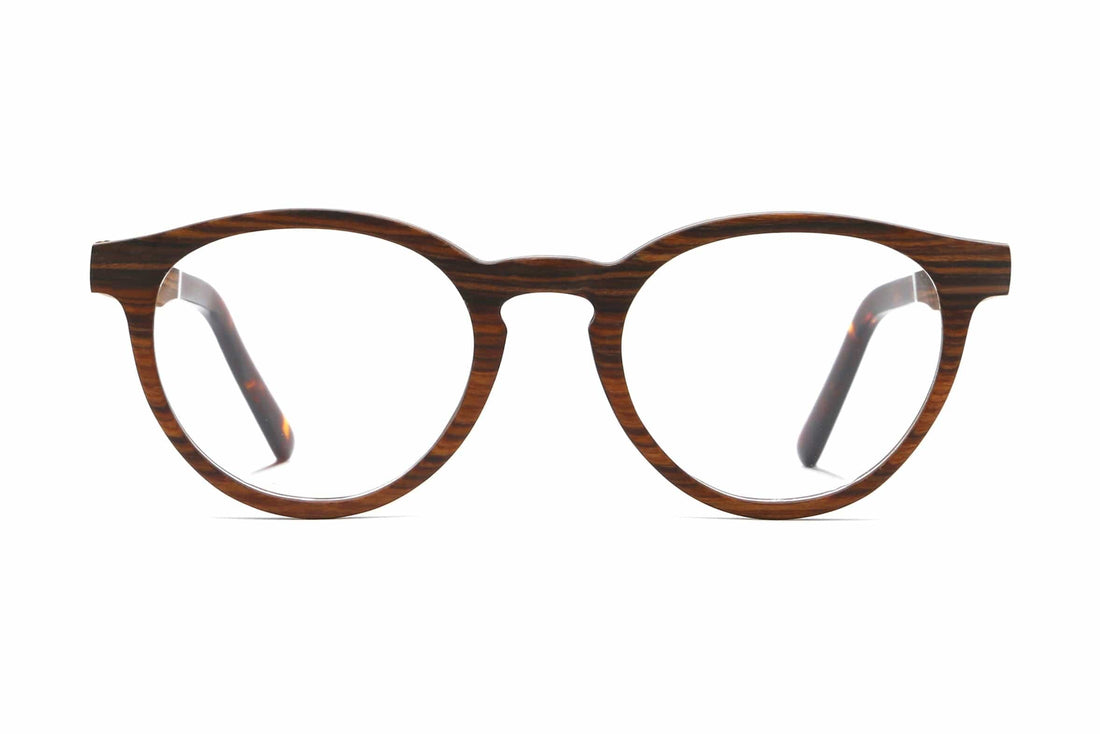
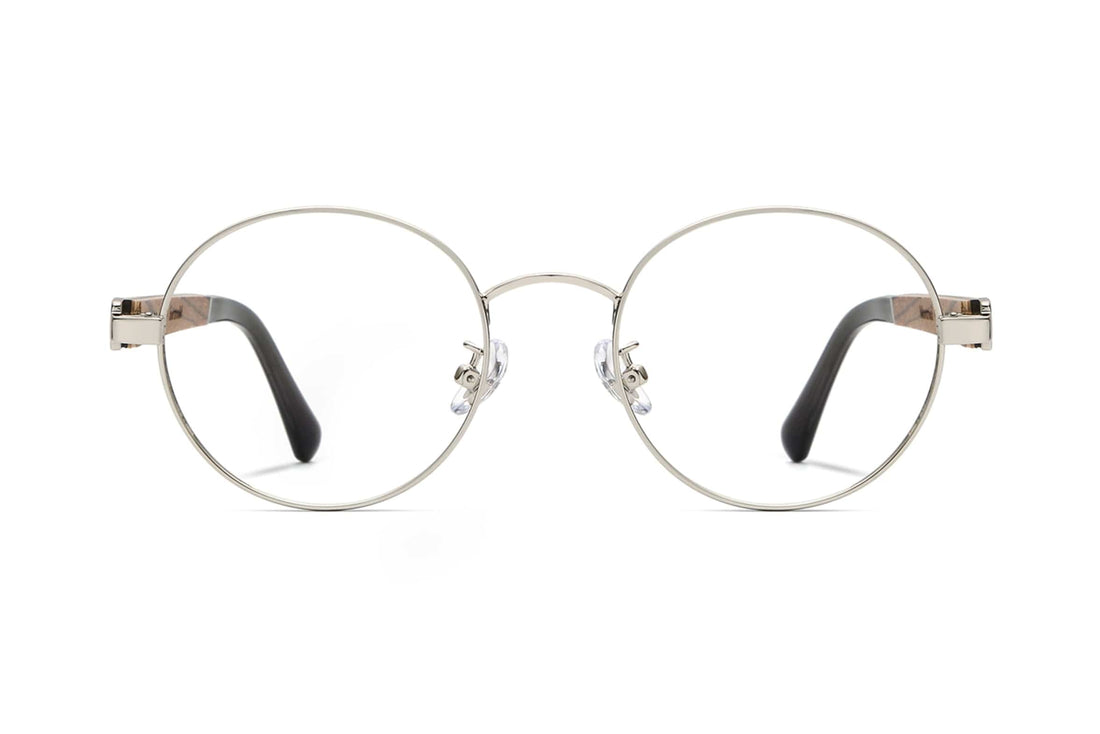
Round frames are probably the most reliably flattering choice for diamond faces, and the reason is simple geometry. The curved silhouette directly contrasts the angular cheekbones — it introduces softness exactly where the face has the most sharpness. When the frame has enough mass to register as a visual counterpoint (medium-to-large rounds rather than barely-there wire frames), that contrast genuinely softens the overall look without making the face appear shapeless.
If you tend to wear one pair for most of the day across different situations — desk, commute, evenings — a medium round in wood or acetate is worth making your starting point. The rounded lens shape does the structural work quietly, so the frame can be as minimal or as expressive as you want in terms of colour and material.
2. Cat-Eye Glasses for Diamond Face Shapes
Cat-eye frames do two things simultaneously on a diamond face: the upswept corners draw the eye diagonally upward and outward, which creates the impression of width at the brow line, and the top-heavy design places visual weight where the forehead is narrower — which is exactly where diamond faces need it most. The result is a frame that both balances and lifts, rather than just balancing.
For women with a diamond face, a cat-eye is often the single strongest starting point. A more dramatic sweep creates a stronger widening effect, which suits medium-to-large diamond faces particularly well. A semi-rimless cat-eye achieves the same structural result with less visual intensity — a good option if you want the benefit without the fashion-forward commitment. Men with diamond faces who want something with character without reading as overtly styled will find a subtle browline-style cat-eye worth considering.
Browse cat-eye glasses for styles that add lift and balance at the brow line.
3. Oval Glasses for Diamond Face Shapes
Oval frames address diamond faces differently from round — not through obvious soft contrast, but through elongated proportion. Where a round frame creates a clear visual counterpoint to angular cheekbones, an oval frame sits more quietly: the curved edges ease the face's sharpness without announcing themselves. If you find round frames feel too bold or retro for everyday wear, oval is worth trying first.
The practical case for oval on a diamond face is strongest when you need a frame that holds up across different contexts — meetings, commutes, casual settings — without reading as a style statement in any of them. The lens shape does real structural work, but does it without drawing attention to itself, which is exactly what you want from a prescription frame you wear all day.
4. Browline Glasses for Diamond Face Shapes
Browline glasses frames have a thick, prominent upper rim that sits along the brow line, and on diamond faces that detail is doing real work. It creates a strong horizontal line across the upper face, widening the appearance of the forehead and drawing attention away from the prominent cheekbones below. The visual weight is placed exactly where diamond faces need it.
For men with a diamond face shape, browline is one of the most effective and versatile starting points. It reads as structured and considered without being fashion-forward, which matters when you're wearing one pair daily across different settings. The combination of horizontal emphasis at the brow and strong contrast with the cheekbones is hard to beat for everyday wear.
5. Soft Geometric Frames for Diamond Face Shapes
Geometric frames occupy a useful middle ground. They introduce angular definition, but when the geometry is softened — hexagonal shapes, pentagon silhouettes, rounded corners on a square base — they add structure without echoing the face's own sharpness. The angular edges create horizontal definition, and the non-rectangular silhouette avoids the elongating effect that tall, narrow frames can produce.
If you tend to wear round frames and want something that feels more editorial or contemporary, softened geometric styles are worth exploring. They work especially well for diamond face shapes that are comfortable with some visual distinctiveness in their frames — the shape does enough structural work that you don't need to overcompensate elsewhere.
Browse geometric glasses for frames that bring structure and contrast to a diamond face.
6. Aviator Glasses for Diamond Face Shapes
Aviator glasses work on diamond faces for the same brow-line reason as browline frames — but they add something browline doesn't. The teardrop lens shape is widest at the top and tapers toward the bottom, which means the lower portion of the lens sits over the jaw area and visually softens a pointed chin. On a diamond face, where the chin is often the narrowest and sharpest point, that coverage genuinely helps. It grounds the lower face in a way a strong horizontal browline frame can't.
If you wear glasses across different environments — office, outdoors, casual — a metal-and-wood aviator holds across those contexts without looking like it's trying too hard in any of them. For men with diamond faces who want one versatile frame that handles both the forehead and the chin, it's one of the most complete structural choices available.
Frames to Avoid for Diamond Face Shapes
Some styles consistently work against the diamond face's natural proportions rather than complementing them:
Bottom-heavy frames pull attention downward and toward the jaw, the narrowest part of the face. This does the opposite of what diamond faces need.
Very narrow or small frames sit directly on the cheekbones without providing any visual counterweight. The cheekbones dominate more, not less.
Sharp, boxy square frames with hard right angles echo the angular structure of a diamond face rather than contrasting it. This can make the overall look feel rigid rather than balanced.
Tall, narrow rectangles — frames with more height than width — add vertical emphasis and can draw the face's length further down toward the pointed chin.
Frame Fit and Sizing for Diamond Face Shapes
Frame shape does its job only when the sizing is right. For diamond faces, a few specifics matter:
Frame width: Look for medium-to-wide frames — roughly 135mm to 145mm total width. Frames narrower than 130mm typically sit too close to the cheekbones and lose the balancing effect entirely.
Lens height: Lenses with 38mm+ depth fill the face proportionally. Very flat, shallow lenses can accentuate the length from cheekbone to chin rather than balancing it.
Bridge fit: A properly fitting bridge ensures the frame sits at mid-nose without dropping down and drawing the eye toward the jaw. Keyhole and saddle bridges tend to work well on diamond faces for this reason.
Avoid frames that pinch at the cheekbones. If a frame feels tight in the mid-face area when you put it on, it's likely too narrow and will sit directly on the cheekbones rather than framing the face above them.
Key Takeaways
-
A diamond face shape is widest at the cheekbones, with a narrower forehead and a tapering chin — distinct from a heart face, where the forehead is the widest point.
-
The most effective frames add visual width at the brow line and introduce softness that contrasts the face's natural angular structure.
-
Round, cat-eye, oval, browline, soft geometric, and aviator frames all work well for diamond face shapes — each for slightly different structural reasons.
-
For women, cat-eye and round are the strongest starting points. For men, browline and aviator offer the most versatility across settings.
-
Frame width (135mm+) and lens depth matter as much as shape category — a round frame in the wrong size loses its structural benefit entirely.
-
Frames to avoid: bottom-heavy styles, very narrow or small frames, sharp boxy squares, and tall narrow rectangles.
Bottom Line
Diamond faces give you a lot to work with — high cheekbones and defined structure that most frames simply need to balance rather than hide. The guiding principle across every style above is the same: visual weight at the brow line, softness through the lens shape, and enough width to frame the face without sitting on its widest point.
If you're ready to shop, Kraywoods offers eyeglasses handcrafted in natural wood, acetate, bio-acetate, and premium metal — with prescription lenses produced in-house at our Canadian optical lab. Browse the full eyeglasses collection to find the best frames for your face.
Also shopping for sunglasses? See our guide to sunglasses for diamond face shapes.
Frequently Asked Questions
What glasses look best on a diamond face shape?
Round, oval, cat-eye, browline, and softened geometric frames are the most flattering for diamond face shapes. These styles add visual width to the narrower forehead, soften prominent cheekbones, and draw attention upward rather than emphasising the angular mid-face. Frame width and lens depth matter as much as the shape category.
Should diamond faces choose thick frames?
Thick frames can work well on diamond face shapes, but the shape matters more than the weight. A thick round or cat-eye frame adds softness and presence without emphasising the cheekbones — and the extra visual weight can actually help balance a narrower forehead. Avoid thick frames that are heavily angular or boxy, as these echo the face's natural sharpness rather than contrasting it.
What glasses work for diamond face shape men?
Browline and aviator frames are the strongest starting points for men with diamond faces. Both place visual weight at the brow line, which widens the appearance of the narrower forehead and balances prominent cheekbones — without requiring an overtly fashion-forward choice for everyday wear.
Can women with diamond face shapes wear cat-eye glasses?
Absolutely — cat-eye frames are one of the best options for women with diamond face shapes. The upswept corners place visual weight at the brow line, widening the appearance of the narrower forehead, while the top-heavy design draws the eye upward and away from the widest part of the face.
What glasses should you avoid with a diamond face shape?
Bottom-heavy frames, very small or narrow frames, and sharp boxy squares tend to exaggerate the natural sharpness of a diamond face rather than balancing it. Proper frame fit — including how the frame sits across the widest part of the face — affects both comfort and how well frames complement facial features.
Should diamond faces avoid rimless glasses?
Rimless glasses tend to be a difficult choice for diamond face shapes. Without a visible frame to draw attention upward or add softness, the cheekbones become the dominant feature with nothing to balance them. If you prefer a minimal look, a thin metal frame or semi-rimless style will give you lightness without losing the structural benefit that diamond faces rely on from their frames.
 Rayhan El-Asmar
Best Glasses for Diamond Face Shape: The Complete Style Guide
Shop by category