
Best Sunglasses for Square Face Shape: The Complete Style Guide
Best Sunglasses for Square Face Shape
8 min read • Posted on 7 July 2026
A square face shape has an angular jawline that's roughly as wide as the forehead, and that structure is exactly why sunglasses for a square face aren't one-size-fits-all — some shapes flatter it far more than others.
In this guide:
- How to confirm you have a square face shape
- Which sunglasses shapes flatter it, and why
- Fit details that matter specifically for sun styles
- What to avoid, even if it looks good in the mirror
- Styling and sizing tips tailored to a square face
If you haven't confirmed your face shape yet, our face shape guide for glasses walks through how to measure and identify each type before you shop.
Do You Have a Square Face Shape?
A square face has:
-
A jaw that's roughly as wide as the forehead
-
A broad, angular jawline with minimal tapering at the chin
-
Flat, well-defined cheekbones sitting close to the same width as the jaw and forehead
-
Face length and width that are close to equal
To confirm: pull your hair back and take a straight-on photo. If your face reads as roughly equal in length and width, with a jaw that stays angular rather than curving inward at the chin, you have a square face shape.
The shape most often confused with square is oblong (sometimes described as rectangle in its more angular form). True oblong is longer than it is wide, with soft, rounded edges and none of the sharp angularity a square jaw has. The rectangle variant keeps that same extra length but with straighter, more angular sides, closer to a square's structure, which is the version most easily mistaken for square. If your face reads as long with straighter sides, our guide to sunglasses for oblong face shape covers the shapes that work for that proportion.
Among celebrities, Cameron Diaz and Daniel Radcliffe are frequently cited examples of a square face shape, both showing the balanced width and defined jawline that define the category.
One variation worth knowing: a soft square face keeps the same balanced proportions across forehead, cheekbones, and jaw, but with more rounding at the jawline than sharp angularity. The same sunglasses principles apply, though soft square faces carry a slightly wider range of shapes confidently, including a few styles that can look too delicate on a more defined jaw.
Best Sunglasses for a Square Face Shape
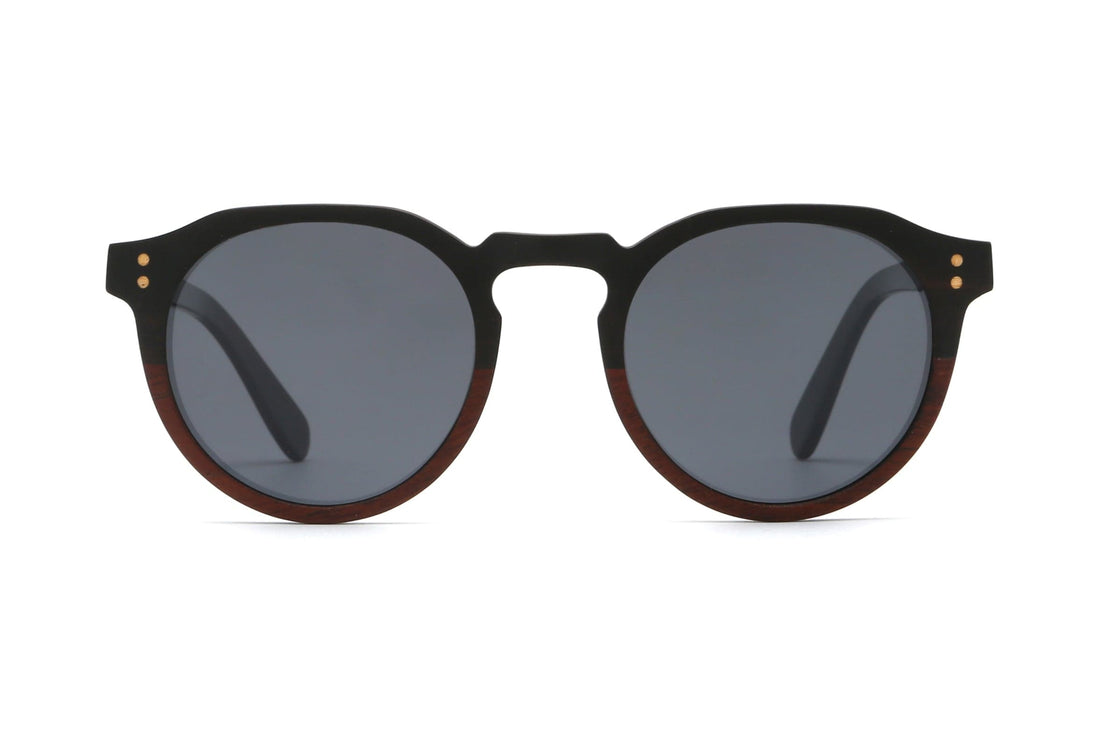
1. Round Sunglasses for Square Faces
Round sunglasses are the most consistently flattering everyday choice for a square face, for a simple geometric reason: an uninterrupted curve creates direct contrast with a strong, horizontal jawline, pulling the eye toward the arc of the frame instead of the angle beneath it. If your square face sits on the broader side, a medium to large round shape gives the strongest softening effect without looking undersized. On a narrower square face, a round frame just slightly wider than your face width keeps things anchored rather than swallowing your features.
Visual weight matters as much as shape. Very thin, minimal round frames can get lost against stronger square features and won't do much softening; a slightly bolder rim holds its own and gives the curve enough presence to register. For sun styles specifically, darker or richly tinted lenses in a round shape add a bit more visual weight up front, which reads as intentional rather than accidental on a defined jawline.
Explore the full round sunglasses range to find a shape and size that matches your proportions.
2. Oval Sunglasses for Squared Faces
Oval sunglasses apply the same softening principle as round shapes, just with less surface area and a slightly gentler presence. The horizontal stretch of an oval lens covers a good portion of the face without needing a large diameter, which makes it a proportionate option on narrower square faces or for anyone who wants softening without a bold, fashion-forward statement. It's a strong choice for everyday sun wear where you want something quietly flattering rather than eye-catching.
Size is the detail to watch. A very small oval loses its softening effect entirely, since the curve needs enough surface area to register against a strong jaw. Medium to large ovals with taller lens height hold their own; petite versions tend to read as an afterthought rather than a deliberate styling choice.
If you're shopping for oval-leaning sun shapes, our full sunglasses collection includes rounded and oval-adjacent styles worth trying on for size.
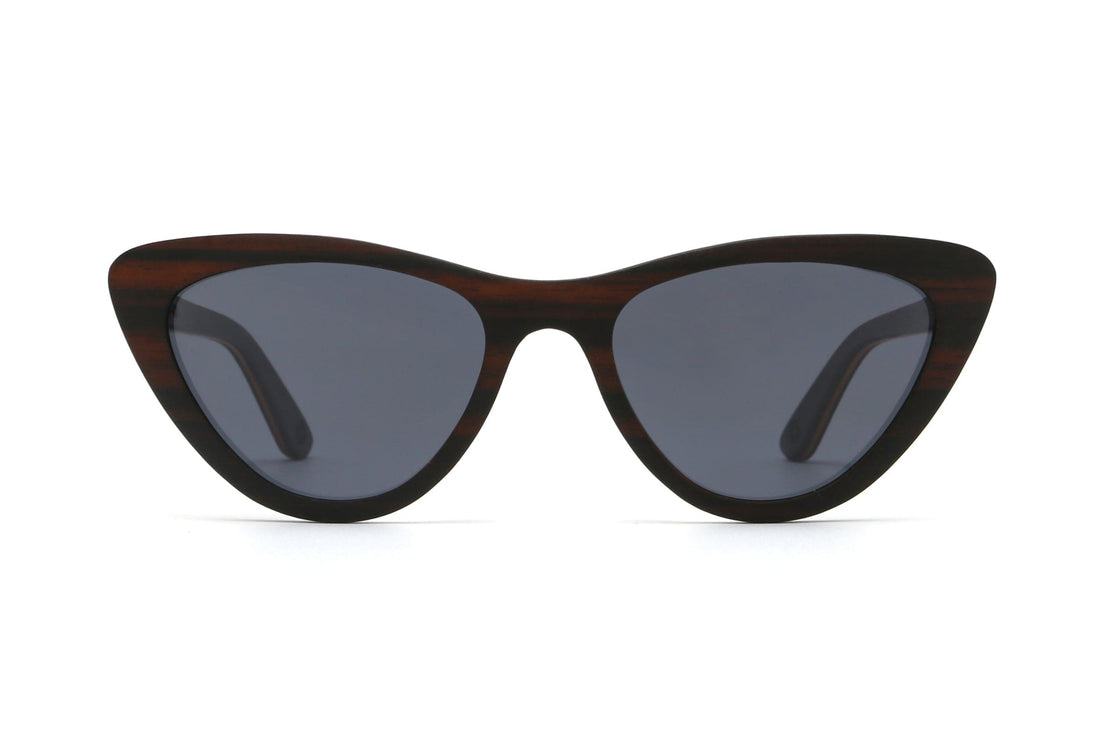
3. Cat Eye Sunglasses for Square Face Shape
Cat eye sunglasses work on a square face for a specific structural reason: upswept outer corners lift visual weight toward the temples, directing the eye upward and away from the jawline. A moderate cat eye with a contained flick works across everyday and travel use, while a more exaggerated sweep in a bold tint reads as a clear style statement. Both flatter a square face; the difference is how much visual signal you want your sunglasses to carry.
Cat eye is the shape to reach for when you want your sunglasses doing active style work, and a square jaw gives an upswept frame something real to contrast against. One thing to sidestep: cat eye sunglasses with a flat, straight lower rim, which reintroduces a horizontal line right at jaw level and undoes the contrast. A curved lower rim keeps the lift working the way it should.
4. Browline Sunglasses for Squared Faces
Browline sunglasses — heavier visual weight across the top, lighter through the lower half — are a genuinely underused option for square faces. That heavier upper structure draws the eye upward toward the brow, exactly the directional shift that square proportions benefit from. Browline earns its place especially when face width is the bigger concern than jaw angularity, since it creates that upward emphasis without needing the large diameter a full round shape requires.
On a narrower square face, a browline in a darker tint or frame tone reads as structured and considered; it holds up across casual and outdoor settings without looking like it's trying too hard. Keep an eye on how close the upper brow line sits to your face, since too close and you lose some of the upward-drawing effect that makes browline worth choosing in the first place.
5. Geometric Sunglasses for a Square Face
Hexagonal, octagonal, and other angular geometric sunglasses work on a square face for a less obvious reason: their diagonal lines cut in a different direction than the horizontal line of a square jaw, creating contrast rather than an echo. Size matters more here than with any other shape, since a small geometric frame looks detail-heavy on a square face and pulls attention right back toward the jaw. A full-sized hexagonal or wide octagonal shape in a solid tint carries enough presence to hold its own against strong square features.
Geometric sunglasses are best treated as an expressive second pair rather than an everyday default, the shape you reach for when building a look around personal style rather than picking the single most versatile option. They flatter a square face genuinely well, but most people don't reach for them as their only pair, which is part of what makes them feel special when they do wear them.
What to Avoid If You Have a Square Face Shape
A few consistent mistakes, even with plenty of strong shapes to choose from:
-
Very angular square or rectangular sunglasses with sharp corners. A strong rectangle mirrors your jaw structure instead of contrasting it, and the straight lower rim doubles the angularity the longer and more pronounced it is.
-
Sunglasses significantly wider than your face. Going well beyond your face width pulls attention sideways and emphasizes the horizontal read of a square face instead of redirecting it.
-
Bottom-heavy frames or lenses. Styles where the lower rim or lens carries more visual weight point the eye toward the jaw, the opposite of what a square face benefits from.
-
Very small or petite sunglasses. Small frames sit in the centre of the face without reaching the cheekbones, leaving the angular jaw unaddressed. The softening effect needs surface area to work, and petite frames don't have it.
Styling & Fit for a Square Face
-
Sizing: go by how a frame sits relative to your own face width rather than a brand's size label — "medium" varies from one style to the next.
-
Larger or broader square face: size up rather than down. A bigger round, oval, or cat eye frame keeps the softening effect intact — scaling a frame down just shrinks the curve without making the face look smaller.
-
Lens height: err toward taller rather than shallow. A shallow lens leaves bare skin between brow and cheekbone on a square face, which undercuts the softening effect of the shape itself.
-
Frame width: let the frame extend to, but not much past, your face's outer edge — right at or just past the jaw is the sweet spot for softening without overwhelming.
-
Prefer a more structured, grounded look? A heavier round or browline frame in a darker material carries that weight well. Want something lighter and softer instead? A slimmer round or oval in a lighter tone works just as well — both flatter a square face; the difference is how much presence you want your sunglasses to have.
Key Takeaways
-
The core principle: choose sunglasses with curves or upward angles — not shapes that echo the angular lines a square jaw already has.
-
Round sunglasses are the most consistently flattering everyday choice; visual weight and a defined rim matter more than on other face shapes.
-
Oval sunglasses offer the same softening principle with a quieter presence, particularly suited to everyday sun wear.
-
Cat eye sunglasses actively redirect the eye upward and work especially well for anyone who wants their sunglasses doing real style work.
-
Browline sunglasses are the most underused category for square faces — top-heavy structure without the large diameter a full round shape needs.
-
Avoid strong rectangular shapes, extra-wide frames, bottom-heavy styles, and very small sunglasses — each works against the contrast principle in its own way.
Bottom Line
A strong jaw is a distinctive feature, not something to hide; the goal is balance, not disguise. That balance comes from curves, upward angles, or top-heavy structure that redirect attention from the jaw toward the eyes, and round, oval, cat eye, browline, and geometric sunglasses each achieve it in a different way.
Kraywoods sunglasses collection covers the shapes that suit square faces best, crafted from sustainable wood, acetate, bio-acetate, and metal, with polarized options and 100% UV protection included on every pair. If you also wear glasses day-to-day, our glasses for square face shape guide walks through the same principles for eyeglasses, including a couple of shapes, like geometric frames, that work a little differently once you're not thinking about sun coverage.
Frequently Asked Questions
What sunglasses are best for a square face shape?
Round, oval, cat eye, browline, and geometric sunglasses all work well on a square face, since each introduces curves or upward angles that contrast a defined jawline. The right pick comes down to how much softening you want and how bold a shape you're comfortable wearing.
What's the difference between a square face and a round face when choosing sunglasses?
A square face has an angular jaw and forehead of similar width; a round face has soft, curved edges with little difference between cheekbone and jaw width. Square faces benefit from curved or upward-angled sunglasses, while round faces usually do better in straighter, more angular shapes — largely the opposite approach.
Can you wear square-shaped sunglasses if you have a square face?
Generally, no — a square or heavily angular rectangular frame mirrors the jaw instead of contrasting it, which doubles the angularity rather than balancing it. Softer rectangles with rounded corners can work as a fallback, but curved shapes flatter a square face far more consistently.
Does lens size matter for sunglasses on a square face?
Yes — lens height matters as much as overall shape. A tall lens breaks up the horizontal lines between brow and cheekbone, while a shallow lens leaves too much bare space and lets the jaw's angularity dominate. Taller lenses generally do more of the softening work than shape alone.
Do men and women need different sunglasses shapes for a square face?
No — the same shapes work regardless of gender, since it comes down to face geometry rather than gender. In practice, men often gravitate toward round or browline styles, and women toward cat eye or oval, but round, oval, cat eye, browline, and geometric shapes all flatter a square face for anyone.
What sunglasses work best for a larger square face?
A larger square face generally suits a medium to large round, oval, or cat eye frame sized close to or slightly past face width, rather than dramatically oversized. Frames that are too small get lost against strong features, while extremely oversized styles can pull attention sideways instead of softening the jaw.
 Chelsea Baker
Best Sunglasses for Square Face Shape: The Complete Style Guide
Shop by category