
How to Choose Sunglasses: The 2026 Buying Guide
Hvordan velge solbriller
12 min read • Updated 19 August 2026
How to choose sunglasses is a question with more genuinely different answers than most buyers realize. Beyond picking a shape or a colour, the right pair balances UV protection, lens quality, frame construction, and physical fit against how you actually use them. A pair for driving isn't the same as a pair for hiking or a pair for everyday wear, and knowing the difference is what turns "okay sunglasses" into ones you'll actually reach for.
This guide walks through what to look for in lenses and frames, how to size sunglasses properly, how to tell genuine polarization from marketing claims, and how to choose the right pair for driving, sports, everyday, and sensitive-eye use cases. Everything ties back to buying decisions worth making rather than product picks worth pushing.
Here's what this guide covers:
-
What to look for when buying sunglasses
-
Understanding lens features (polarization, UV protection, tint colour)
-
Frame materials that matter
-
How to size sunglasses properly
-
Choosing by use case (driving, active, everyday, sensitive eyes)
-
How to spot genuine polarization and real UV protection
-
Warranty, returns, and how long good sunglasses should last
If you already know what shape you want, head to the Face Shape & Fit Guides to browse frames by face shape. Otherwise, start with the essentials below.
What to look for when buying sunglasses
Good sunglasses come down to four things: lens quality, frame construction, physical fit, and a warranty that reflects how long the pair should actually last. Everything else, colour, brand, price range, is secondary to getting these four right.
-
Lens quality: 100% UV protection (UV400), scratch-resistant coating, and clear optical properties without distortion
-
Frame construction: durable materials, secure hinges that don't loosen, and comfortable pressure points at the nose and temples
-
Physical fit: sunglasses that stay on your face during normal movement, don't pinch behind the ears, and don't slip down the nose
-
Warranty and returns: a policy that reflects genuine confidence in build quality, not a 30-day return with nothing beyond that
The rest of this guide breaks each of these down in depth, then covers how those factors shift for specific use cases like driving, sports, and sensitive eyes.
Understanding lens features
The lens does most of the work in a pair of sunglasses. Frame decisions are largely aesthetic; lens decisions are functional. Three lens attributes matter most: UV protection, polarization, and tint colour.
UV protection: what UV400 actually means
UV400 means the lens blocks 100% of ultraviolet light up to 400 nanometers, which covers both UVA and UVB rays. It's the highest UV protection classification available for sunglasses and is what every quality pair should offer. Anything less means partial UV exposure, which is worse for your eyes than wearing no sunglasses at all (because dark lenses cause pupils to dilate, letting more UV in through the sides).
A separate rating system, UV categorization 0-4, describes how much visible light the lens blocks. Category 3 is standard for most sunglasses. Category 4 is for extreme conditions like mountain climbing or on-water reflections.
| UV Category | Visible light blocked | Best for |
| Category 0 | 0-20% | Fashion / indoor use |
| Category 1 | 20-57% | Overcast days, low sun |
| Category 2 | 57-82% | Medium sun, general outdoor |
| Category 3 | 82-92% | Bright sun, most everyday and beach use |
| Category 4 | 92-97% | Extreme sun (mountains, snow, tropics) |
Polarization: what it does and how to tell if it's real
Polarized lenses have a filter that blocks horizontal light waves, the kind that bounces off water, snow, roads, and car hoods. The result is sharper contrast, less glare, and clearer vision in bright conditions. Polarization is genuinely useful for driving, outdoor sports, and time near reflective surfaces. It's less critical for city walking or indoor-heavy days.
To test if sunglasses are genuinely polarized, hold them up to an LCD screen (phone, laptop) and rotate them 90 degrees. Real polarized lenses will darken or completely black out at one angle. Non-polarized lenses show no change. This test takes 5 seconds and confirms the polarization claim before you commit.
Tint colour: what each tint does
Lens tint affects how you perceive contrast and colour. The three tints that cover most use cases:
| Tint colour | Effect | Best for |
| Grå | Neutral, true colour | General everyday use, driving in bright sun |
| Brown / amber | Enhances contrast, warms colours | Overcast driving, hiking, variable light |
| Grønn | Sharp contrast, minimal colour shift | Golf, tennis, general sport |
| Yellow / gold | High contrast in low light | Low-light conditions, night driving, cycling |
| Blue / purple | Mostly aesthetic | Fashion, minimal functional benefit |
Frame materials that matter
Frame material affects weight, durability, comfort, and how a pair ages. The main options and what separates them:
Bio-acetate and acetate
Acetate is a plant-based material with rich colour depth and a substantial feel. It's the premium material for fashion-forward sunglasses because acetate frames hold patterns, tortoiseshells, and colour transitions that plastic ones can't match. Bio-acetate is a sustainable variant made from cotton seed or wood pulp, offering the same feel with a meaningfully lower environmental footprint.
Wood and bamboo
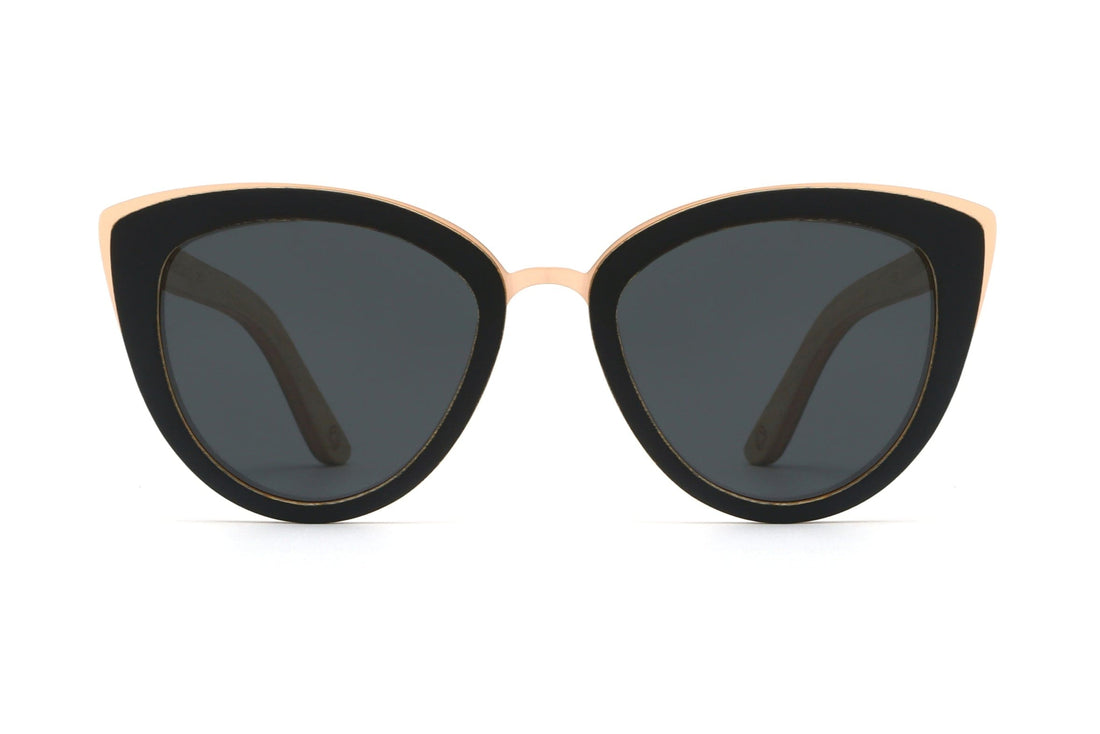
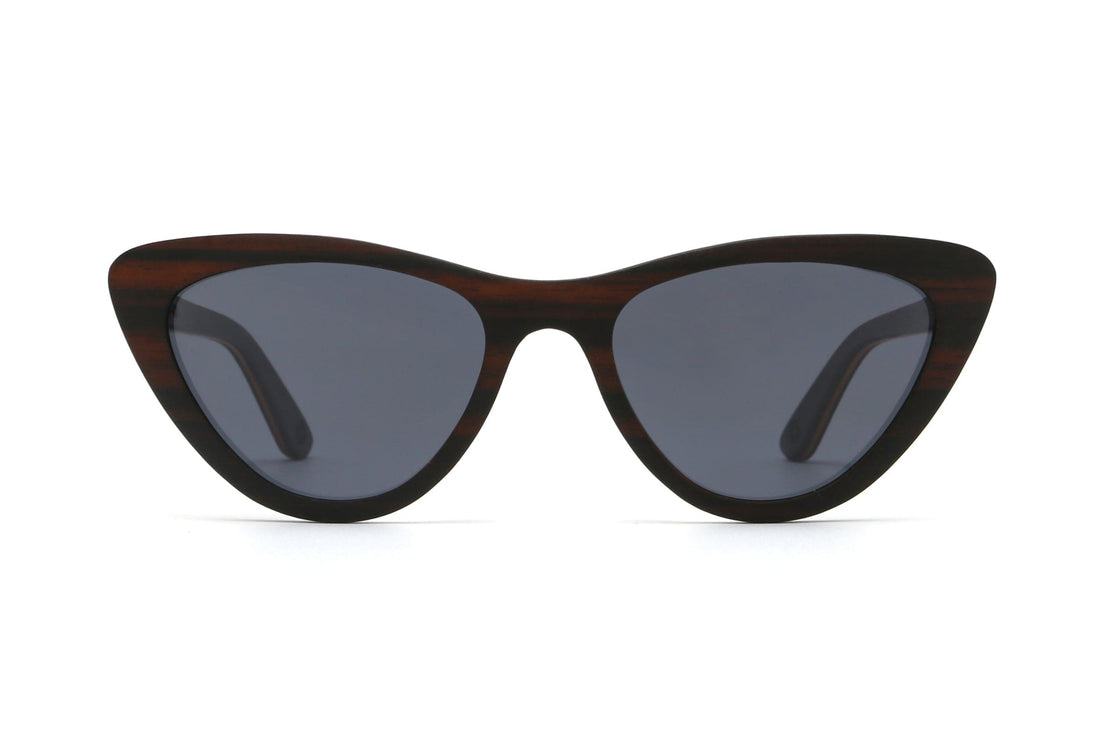
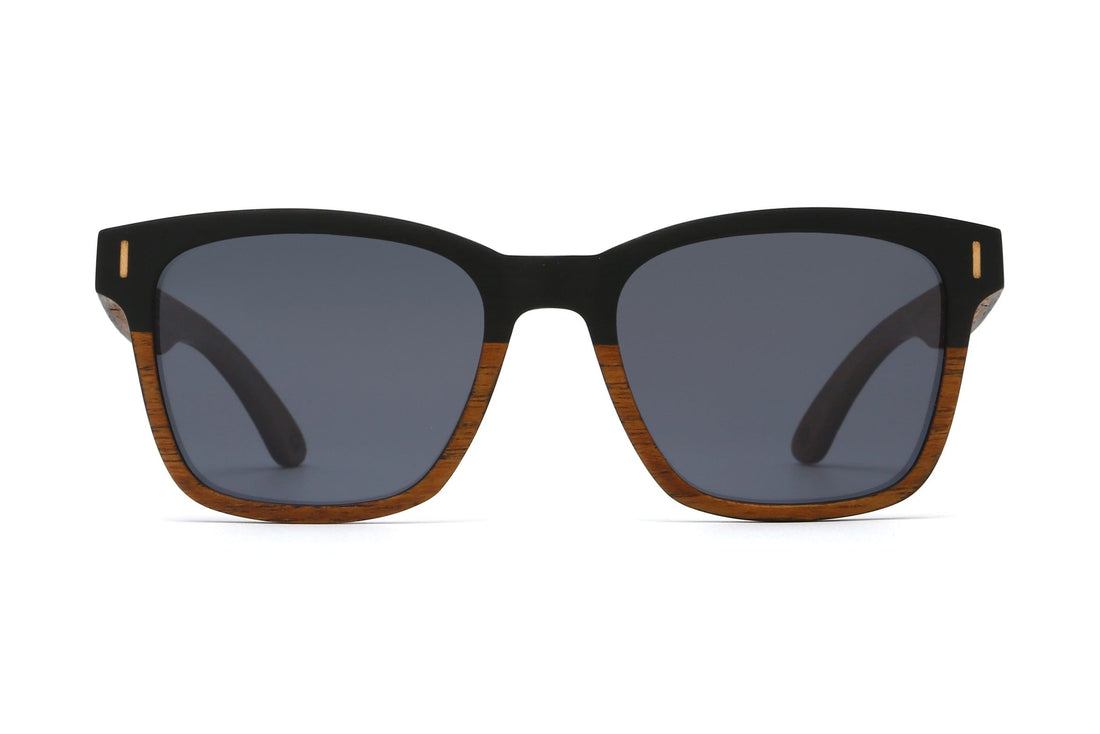
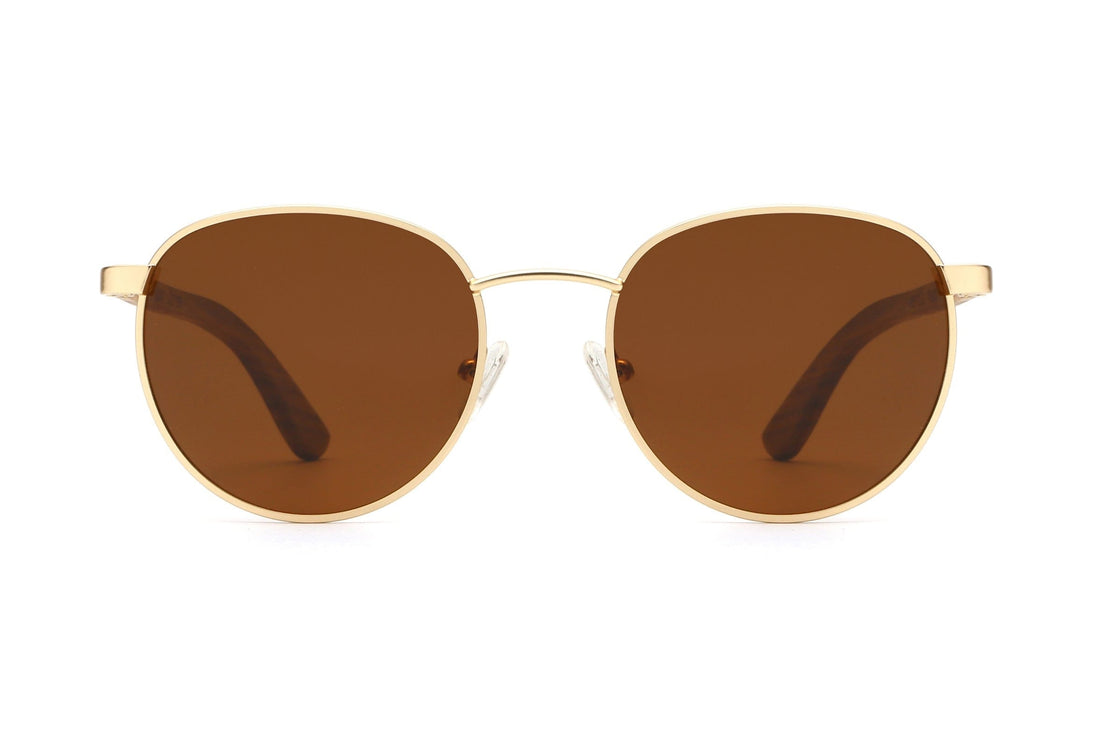
Wooden sunglasses frames are lightweight, unique in grain and finish, and generally sustainable when sourced from FSC-certified suppliers. Each pair varies slightly because of natural grain, which many buyers prefer. The trade-off is water sensitivity, so wooden frames need a bit more care than acetate or metal. Kraywoods specializes in wooden and bio-acetate frames sourced from FSC-certified suppliers.
Metal
Metal sunglasses frames (stainless steel, titanium, aluminum alloys) are durable, corrosion-resistant, and hold shape well. Titanium in particular is lightweight and extremely durable. Metal frames tend to have more visual weight and can feel cooler on the skin, which some wearers prefer and some don't.
Plastic (injection-molded)
Cheap plastic frames are lightweight and inexpensive but wear out faster, feel less finished, and don't hold up to daily use the way acetate or metal does. Fine for backup sunglasses or single-use occasions, not recommended for a primary pair.
How to size sunglasses properly
Sunglasses that don't fit correctly slip down the nose, pinch behind the ears, or leave gaps at the sides that let sun in. Fit is measured with three numbers, usually printed inside one of the temple arms as, for example, "52-18-140":
-
Lens width (52mm in the example): the horizontal width of one lens
-
Bridge width (18mm): the distance between the two lenses across the nose
-
Temple length (140mm): the length of the arm from the hinge to the ear tip
Most adults fall into a lens width of 48-56mm, a bridge width of 16-20mm, and a temple length of 135-150mm. If you already own a pair that fits well, check the numbers printed inside the arm and use them as your reference point for future purchases.
Beyond the numbers, the fit test is simple. Sunglasses should sit on the bridge of your nose without pressing hard on your cheekbones. The arms should rest lightly on your ears without pinching. When you look down and shake your head, the pair should stay in place. If any of these fail, the size is wrong regardless of what the numbers say.
Choosing sunglasses by use case
Face shape gives you starting points for style. Use case gives you starting points for function. Most buyers get the second right and let the first happen naturally within it.
Sunglasses for driving and travel
Polarized lenses are the most important feature for driving. Glare from wet roads, car hoods, and windshields reduces visibility dramatically, and polarization cuts most of it. Grey or brown lens tints work best for true colour perception at speed. Frames should be lightweight enough for long-wear comfort during commutes or flights, with secure hinges that don't shift when you turn your head.
A note on polarization and screens: polarized lenses can make some LCD screens (car dashboards, some digital instrument panels) harder to read. Test how they interact with your specific car before buying if you drive frequently.
Sunglasses for active lifestyles
If you hike, run, cycle, or spend time outdoors, sunglasses need to handle sweat, movement, and impact. Look for polycarbonate lenses (shatter-resistant), non-slip nose pads or temple grips, and a snug fit that doesn't shift during activity. Wooden sunglasses and bio-acetate frames with spring hinges tend to be surprisingly good for this, offering lightweight comfort and durability in a way that's easy to underestimate. Frames that look sporty aren't always more functional than good all-purpose frames.
Sunglasses for everyday and fashion
For daily wear, the balance shifts from function to comfort and style. Lightweight materials, spring hinges, and neutral or classic tints (grey or brown) work across the widest range of outfits and settings. Everyday sunglasses reward investment in build quality more than most people expect, because you'll actually wear them, and cheap frames that break or lose their finish get replaced twice as often. Statement styles work well when they match how the wearer already dresses, less well when they're purchased aspirationally.
Sunglasses for sensitive eyes
Light sensitivity, migraines, and dry eye conditions all shift the buying priorities. Look for higher UV categorization (Category 3 or 4), lens tints that reduce glare specifically (brown or amber for warm-light sensitivity, grey for general brightness), and larger frames that block peripheral light. Photochromic lenses that darken with sunlight are worth considering, since they adjust automatically as light changes, which reduces the sensitivity spike when transitioning from indoor to outdoor.
Wrap-style frames that curve toward the face give better peripheral protection than flat-front styles. Some readers with severe light sensitivity find they need frames sized larger than their face shape would normally suggest, which is a legitimate fit adjustment.
How to spot genuine polarization and real UV protection
The sunglasses market has a genuine counterfeit problem, and cheap knockoffs often claim polarization and UV protection they don't actually deliver. Three tests take under a minute and separate legitimate pairs from marketing claims:
Test 1: The LCD screen polarization test
Hold the sunglasses in front of an LCD screen (phone, laptop, monitor) and rotate them 90 degrees. Real polarized lenses will darken significantly or black out completely at one angle. If nothing changes as you rotate, the polarization claim is false.
Test 2: The reflection test
Look at a reflective surface (a still puddle, a car hood, a shiny table) through the lens. Genuine polarization visibly reduces the glare when you tilt your head. Non-polarized lenses show the same reflection at any angle.
Test 3: The UV verification
Genuine UV protection isn't visible to the naked eye. Dark lenses don't equal UV protection, and light lenses can be fully UV protective. The reliable check is the product labelling: look for "UV400," "100% UV protection," or "blocks UVA and UVB." Any of these means legitimate protection. Vague marketing language like "UV filtering" or "UV blocking" without a percentage or the UV400 designation is often meaningless.
For rigorous verification, some optical shops offer UV testing on demand; they'll measure the lens's actual UV blockage against calibrated standards. Worth doing if you've invested in a premium pair and want confirmation. Check out our guide on how to know the quality of your sunglasses for more tips.
Warranty, returns, and how long good sunglasses should last
Warranty terms tell you what a brand actually believes about their build quality. A pair with a 30-day return window and no warranty beyond that is priced accordingly. A pair with a 6-12 month manufacturer's warranty on hinges, frames, and lens integrity reflects genuine confidence in the product.
What to look for in coverage:
-
Warranty period on frame structure (hinges, arms, bridge): 6-12 months minimum for quality brands
-
Return policy on unworn frames: 30 days is standard, 60-90 days is generous
-
Replacement policy for defective lenses or coatings: some brands offer lifetime coverage on lens integrity
-
Availability of replacement nose pads, screws, and cases: a sign that the brand supports long-term ownership
How long should a good pair actually last? Premium sunglasses ($150-300 range) with proper care generally last 3-7 years of regular wear. Coatings degrade before frames do, so a re-lensing at the 3-4 year mark is normal on frames you want to keep. Cheap frames often need replacement in 6-18 months due to hinge failure, frame warping, or coating degradation. For shoppers whose main concern is frame durability, our guide to the most durable sunglasses of 2026 would help narrow down your options.
Face shape considerations (brief)
Face shape guidance for sunglasses works on the same principles as prescription glasses: frames should contrast with your face's most pronounced feature. Round faces benefit from angular frames, angular faces from softer curves, and heart-shaped faces from bottom-heavy shapes that balance a wider forehead.
Rather than repeat that entire framework here, head to the Face Shape & Fit hub for the complete shape-by-shape breakdown. The hub covers all six major face shapes with detailed frame recommendations and specific collection routing for each.
Key takeaways
-
Sunglasses buying decisions come down to lens quality, frame construction, physical fit, and warranty coverage. Everything else is secondary.
-
UV400 is the meaningful UV protection standard. UV Category 3 is standard for most everyday use; Category 4 for extreme conditions.
-
Test polarization by rotating the lens 90 degrees against an LCD screen. Genuine polarization visibly darkens; false claims don't change.
-
Size matters. Check the three numbers inside the temple arm (lens width, bridge, temple length) against a pair you already own that fits well.
-
Match sunglasses to use case first, aesthetics second. Driving, active, everyday, and sensitive-eye pairs all reward different feature priorities.
-
Warranty terms are the honest signal about build quality. 6-12 months minimum on frames, 30-60 day returns on unworn pairs.
Avsluttende tanker
Choosing sunglasses well means understanding what actually matters: lens quality, frame construction, physical fit, and coverage that reflects real build quality. Everything past those four factors is preference, and preferences are personal in a way this guide can't decide for you. The framework here works whether you're buying your first pair or your fifteenth.
At Kraywoods, every pair is designed in Canada with sustainable materials: wooden or bio-acetate frames, UV400 protection, polarized lenses, and warranty coverage that reflects genuine confidence in build quality. I you're ready o shop, browse the full sunglasses collection to find your ideal pair.
Ofte stilte spørsmål
How can I tell if my sunglasses are genuinely polarized?
Hold the sunglasses in front of an LCD screen (phone, laptop) and rotate them 90 degrees. Genuine polarized lenses will darken significantly or black out completely at one angle. If the lens tint stays consistent as you rotate, the polarization claim is false. This test takes 5 seconds and works reliably.
What does UV400 actually mean?
UV400 means the lens blocks 100% of ultraviolet light up to 400 nanometers, covering both UVA and UVB rays. It's the highest UV protection standard for sunglasses and what every quality pair should offer. Look for the term "UV400" or "100% UV protection" on the label. Vague terms like "UV filtering" often mean partial protection only.
How much should I spend on a good pair of sunglasses?
Everyday sunglasses generally justify spending in the $90-190 range, where quality lenses, real polarization, and durable frame construction become standard. Below $50, quality and durability drop sharply. Above $250, the returns on quality diminish, since most premium brands charge for name recognition rather than dramatically better construction beyond that point.
How do I know my sunglasses size?
Check the three numbers printed inside one of the temple arms, usually formatted like "52-18-140." These represent lens width, bridge width, and temple length in millimeters. If you have a pair that fits well, use those numbers as your reference. Most adults fit in lens widths of 48-56mm and temple lengths of 135-150mm.
Are expensive sunglasses actually worth it?
Premium sunglasses ($150-300 range) typically justify the price through better lens quality, more durable frame construction, longer warranty coverage, and materials that age well. Beyond $300, you're often paying for brand recognition rather than dramatically better construction. Below $50, quality typically drops sharply. The mid-premium range offers the best value for most buyers.
What are the best sunglasses for sensitive eyes?
Look for UV Category 3 or 4 lenses, brown or amber tints to reduce glare, and larger frames or wrap styles that block peripheral light. Photochromic lenses that darken automatically with light exposure are worth considering. Sensitive-eye buyers often benefit from frames slightly larger than their face shape would normally suggest, which is a legitimate fit adjustment.
 Chelsea Baker
How to Choose Sunglasses: The 2026 Buying Guide
Shop by category