
Best Sunglasses for Triangle Face Shape: The Complete Style Guide
Best Sunglasses For Triangle Face Shape
10 min read • Updated on 26 June 2026
Sunglasses for a triangle face shape work best when they create balance — drawing visual attention away from the widest point of the face and adding presence where it's naturally narrower. The right frame makes that happen without any effort. The wrong one fights your features, even if it looks great on someone else.
What this guide covers:
-
How to identify which type of triangle face shape you have
-
The frame principles that create balance on each variant
-
The best sunglass styles — with specific guidance for men and women
-
Fit and sizing guidance
Not sure of your face shape yet? The face shape guide for glasses walks through how to measure your proportions accurately in a few steps.
What Is a Triangle Face Shape?
Triangle face shape comes in two distinct variants. Which one you have determines everything about which frames will flatter you — so it's worth taking a minute to identify yours before jumping to the recommendations.
Inverted Triangle Face Shape (Base-Up)
The more common of the two variants. The face is widest at the top and narrows sharply toward the chin, creating a V-shaped silhouette. It's often confused with a heart-shaped face, but the distinction matters for frame selection: a heart face has prominent cheekbones and a softly pointed chin, sometimes with a widow's peak. An inverted triangle has a wider, flatter forehead, a more angular jaw, and less cheekbone definition. Not sure if you have an inverted triangle or heart face? The sunglasses guide for heart-shaped faces can help you tell the difference.
Key characteristics:
- Forehead is the widest measurement on the face
- Jaw is noticeably narrower and more angular than the forehead
- Chin is defined and pointed
- Widest point is high — at the temples and forehead — without strong cheekbone prominence
Celebrities often cited with this face shape include Reese Witherspoon and Ryan Gosling.
Base-Down Triangle Face Shape
The less common variant — sometimes called a pear-shaped face. The proportions are essentially the inverse of the above: narrower at the top, widening toward the jaw. If your jaw is clearly the broadest measurement when you compare forehead, cheekbones, and jaw width, this is your variant. It's sometimes confused with a diamond face shape — if you're between the two, check our sunglasses guide for diamond face shapes to narrow it down.
Key characteristics:
-
Forehead is narrower than the jaw
-
Jawline is the widest measurement on the face
-
Cheekbones sit lower, closer in width to the jaw than the forehead
-
Face reads as bottom-heavy in proportion
Minnie Driver is a commonly referenced example of this variant.
What Makes a Sunglass Frame Work on a Triangle Face Shape
The principle behind every recommendation in this guide is the same: contrast and visual redirection. Frames that mirror your face shape tend to emphasise what's already there. Frames that contrast it — adding visual weight where the face is narrowest, redirecting attention from its widest point — are what actually create balance.
For inverted triangle faces: the goal is to draw the eye downward and add presence below the cheekbones. Avoid anything that extends or emphasises the already-wide upper face.
For base-down triangle faces: the goal is the opposite — concentrate visual weight at the top of the frame to create the impression of a wider forehead and draw attention away from a broader jaw.
Regardless of which variant you have, these are the frame qualities that consistently create balance:
-
Contrast over mirroring: Frames that echo your face shape emphasise what’s already there. Frames that introduce a contrasting silhouette — curved on an angular face, structured on a softer one — are what actually redirect the eye.
-
Visual weight placement: Where a frame carries its mass — at the top, bottom, or evenly distributed — determines where the eye goes first. For both triangle variants, the goal is to place visual weight opposite the face’s widest point.
-
Lens depth over width: A frame with real vertical height fills the face more proportionally than a wide, flat frame with minimal lens area. For triangle face shapes especially, depth is more important than spread.
-
Proportional frame width: The frame should never extend beyond the widest point of your face. For inverted triangle faces that means staying within the forehead width. For base-down faces, going slightly wider than the forehead creates the impression of upper-face balance. Specific measurements are covered in the fit section below.
Best Sunglasses for Inverted Triangle Face Shape
The frames below all work by adding visual weight below the cheekbones and softening or redirecting attention from the wide upper face.
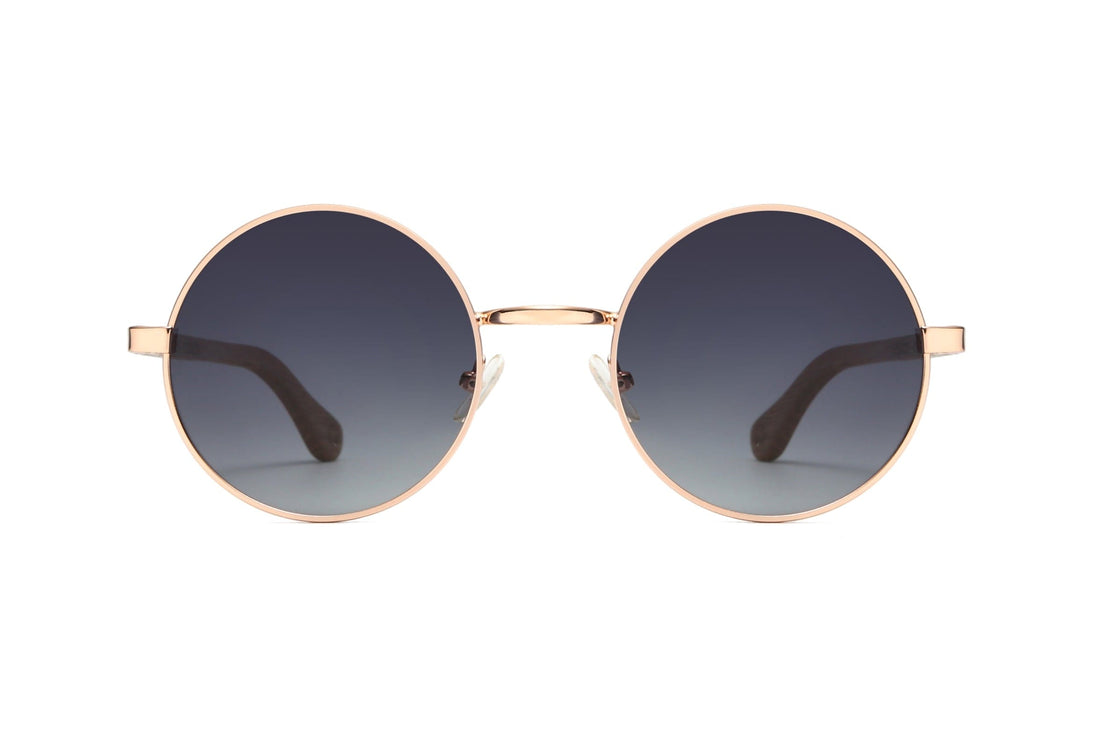
1. Round Sunglasses
Round frames work on an inverted triangle face through contrast — the curved silhouette introduces softness that the face’s angular V-shape doesn’t naturally have, spreading visual weight across the mid-face and cheekbones rather than up toward the wide forehead. Oval frames follow the same principle with a slightly elongated silhouette, achieving the same proportional result with a softer edge.
Size is the variable that matters most. A very small or delicate round frame sits in the centre of the face without registering as a counterpoint to the angular contrast above it. If you’ve tried round frames before and they didn’t do much for your face, try a larger size before writing the style off — a medium-to-large round with a substantial rim has the presence to anchor the mid-face and redirect the eye away from a wide forehead.
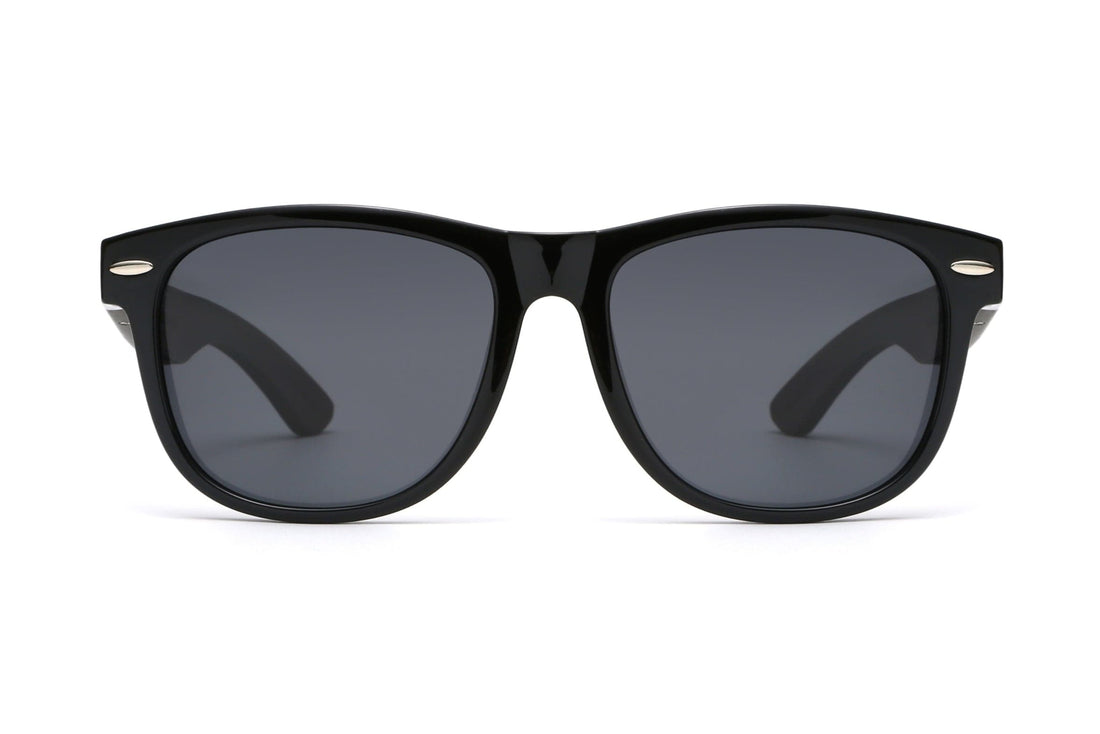
2. Rectangle Sunglasses
Rectangle frames offer structured definition at cheekbone level — on an inverted triangle face, that placement is exactly right. The horizontal width creates visual emphasis across the mid-face rather than at the top. The key variable is lens depth: a rectangle with meaningful vertical height fills the lower face proportionally, while a very flat, wide rectangle with minimal lens area extends the horizontal line across the already-wide upper face instead of redirecting it.
For men with an inverted triangle face who find round frames too soft, rectangle sunglasses are the stronger everyday alternative. The clean, structured lines work across most settings without requiring a deliberate style choice — and the mid-face emphasis does the proportional work without drawing attention to itself.
3. Firkantede solbriller
Square frames combine structure with balanced proportions — equal width and height — which makes them particularly effective on an inverted triangle face. The angular lines create definition across the mid-face and cheekbone area, and the equal lens dimensions add visual weight at the right level without tipping into the wide, flat-rectangle territory that backfires on this face shape.
Square sunglasses are one of the most versatile starting points in this guide — especially for men with an inverted triangle face who want something more structured than round but don’t want a frame that reads as a deliberate fashion choice. The silhouette suits most personal styles without effort. For women, a square frame with slightly softened corners sits between structured and approachable, with the same proportional benefit and a less angular edge.
Best Sunglasses for Base-Down Triangle (Pear) Face Shape
A base-down triangle face is less common — but when it comes to sunglasses, the strategy is clear. Frames that concentrate visual weight at the top of the frame create the impression of a wider forehead and balance the face from above. The three styles below are the most consistent performers for this variant.
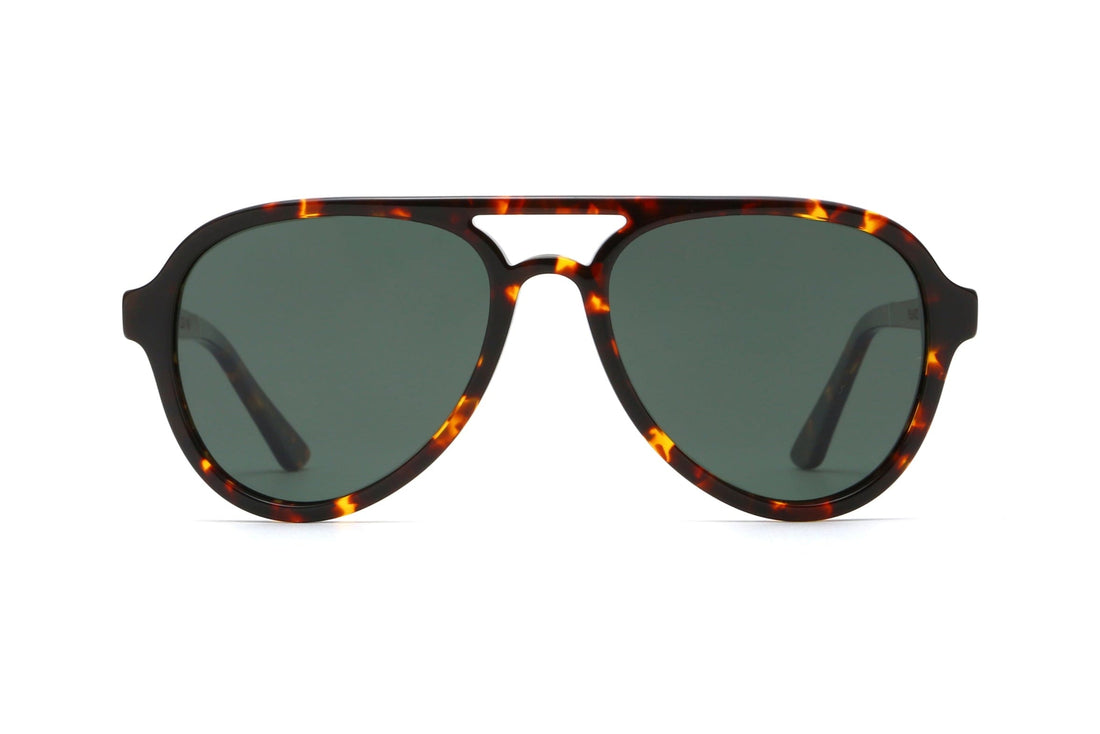
1. Aviator-solbriller
Aviators are built around a wide upper frame that sits at the brow, tapering downward into the teardrop lens. On a base-down triangle face, that wide upper portion is exactly what a narrow forehead needs — it creates visual width at the top and draws the eye upward from the jaw. The thin bridge keeps things from reading as bulky, adding perceived forehead width without overwhelming a narrower upper face.
For men with a base-down triangle face who want a frame that works outdoors, while driving, and in everyday wear without any deliberate style effort, a classic aviator is one of the most versatile picks in this guide. The silhouette is familiar enough to feel effortless, and the proportional logic works reliably across most face sizes within this variant.
2. Katteøye-solbriller
Cat-eye sunglasses are the most consistently flattering choice for a base-down triangle face. The upswept outer corners draw the eye diagonally upward from the face’s widest point — the jaw — and toward the upper face, creating the impression of forehead width without requiring a thick or heavy frame. The bolder the flare at the outer corner, the more actively the frame redirects attention.
For women with a base-down triangle face, a pronounced cat-eye is often the single best starting point in this guide. If most sunglasses make your jaw feel like the focal point of your face, this is the style most likely to change that. A dramatic upswept tip does significantly more proportional work than a subtler, gently winged frame — the difference is visible.
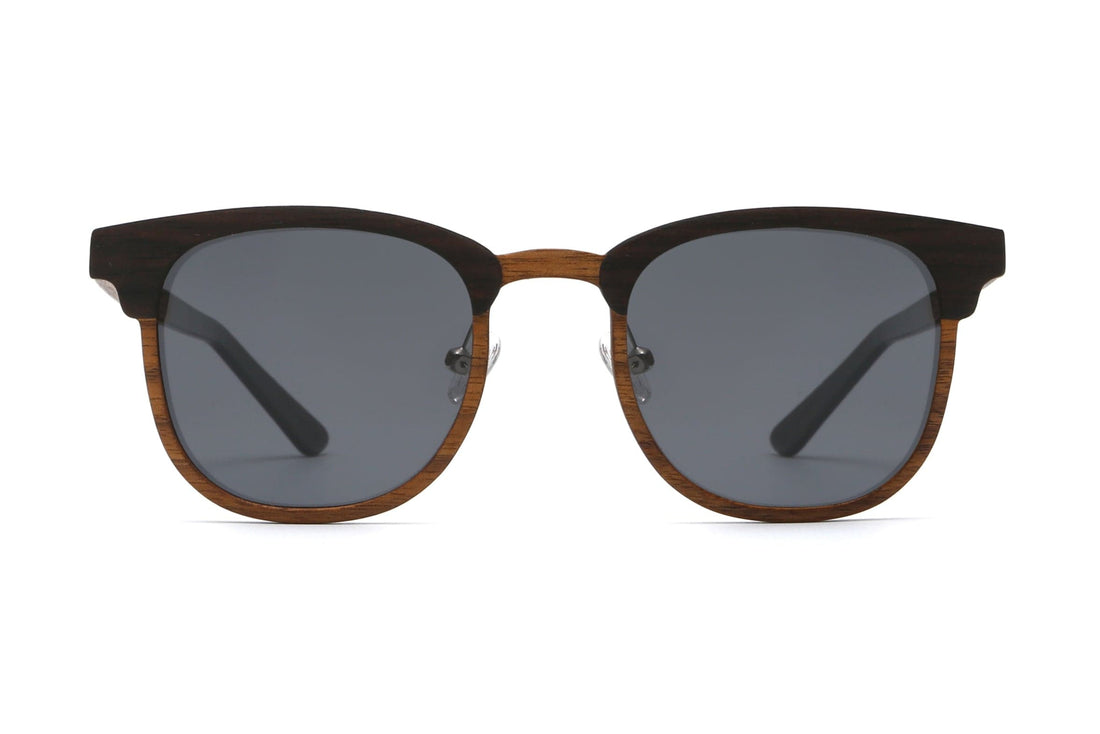
3. Brune solbriller
Browline frames are built around a bold upper rim at the brow line with a lighter lower portion — placing all visual weight exactly where a base-down triangle face needs it. That strong horizontal line across the forehead creates the impression of width above the jaw and draws the eye upward from the face’s widest point.
For men with a base-down triangle face who want upper-face emphasis without the directional quality of a cat-eye, browline sunglasses are the natural alternative. The style sits comfortably between classic and contemporary — versatile enough for everyday wear, with enough brow presence to actively balance the face rather than just sit on it.
Sunglasses to Avoid on a Triangle Face Shape
For inverted triangle faces:
-
Wide, heavy-topped frames: add width directly at the brow, reinforcing the wide upper face rather than balancing it.
-
Very small frames: sit in the upper face without reaching the cheekbones, leaving the V-shaped taper fully exposed.
-
Wide, flat rectangles with minimal lens depth: extend the horizontal line across the widest part of the face with nothing to compensate below.
-
Rimless or ultra-minimal frames: no frame mass means nothing to redirect attention or soften the angular V-shape.
For base-down triangle faces:
-
Frames with a heavy lower rim: draw the eye downward toward the jaw, reinforcing the bottom-heavy proportion.
-
Rimless or very minimal frames: nothing to create the impression of upper-face width; the jaw's prominence reads uninterrupted.
-
Round or oval frames widest at the bottom: mirrors the face's widest point rather than contrasting it.
Frame Fit and Sizing
-
Frame width: Inverted triangle faces: keep frames within or at your cheekbone width — roughly 130–142mm for most adults — to avoid extending an already-wide upper face. Base-down triangle faces: aim slightly wider than your forehead, typically 135–145mm, to build visual width at the top.
-
Lens depth: Lenses with 40mm or more of vertical height fill the lower face proportionally on inverted triangle faces and pull emphasis upward on base-down faces. Flat lenses with minimal height tend to underperform for both.
-
Bridge placement: A low or keyhole bridge positions the frame lower on the face — effective on inverted triangle faces to direct attention away from the forehead. A medium bridge keeps the frame centred for base-down triangle faces.
-
Temple attachment: Look for frames where temples attach at or below the mid-point of the lens height. Temples connecting at the very top of the frame reinforce upper-face width on inverted triangle faces; higher attachment points help lift the eye on base-down faces.
Viktige konklusjoner
-
Triangle face shape comes in two variants with opposite frame logic — inverted triangle (wide forehead, narrow jaw) and base-down triangle (narrow forehead, wide jaw).
-
The inverted triangle is the more common variant and is frequently confused with a heart-shaped face — the key difference is a wider, flatter forehead and a more angular jaw with less cheekbone definition.
-
For inverted triangle faces: round, rectangle, and square frames add visual weight below the cheekbones and soften the V-shaped taper.
-
For base-down triangle faces: aviator, cat-eye, and browline frames concentrate visual weight at the top of the frame, balancing a narrower forehead against a wider jaw.
-
Lens depth matters as much as frame shape — prioritise frames with adequate vertical height over flat, wide styles regardless of which variant you have.
-
Frame width should stay proportional to your widest facial measurement — not exceed it on an inverted triangle face, slightly wider than the forehead on a base-down triangle face.
Konklusjon
A triangle face shape responds well to frames that work through contrast — placing visual weight where the face is narrowest and redirecting attention from its widest point. Once you know which variant you have, the choice between styles comes down to personal taste rather than guesswork.
If you're ready to shop, Kraywoods sunglasses cover all the styles above, handcrafted from sustainable wood, acetate, bio-acetate, and premium metal with full UV protection on every pair. Prescription sunglass options, as well, are made in-house at our Canadian optical lab.
Ofte stilte spørsmål
What is a triangle face shape?
A triangle face shape is defined by an imbalance between the forehead and jaw widths. The inverted triangle — the more common variant — has a wide forehead and narrow jaw. The base-down triangle or pear shape is the opposite: a narrow forehead and wider, more prominent jaw. Both differ from an oval face, which stays balanced throughout, and from a heart face, which has more prominent cheekbones and a softer chin.
Is an inverted triangle face shape the same as a heart face shape?
Not exactly. Both have a wider upper face and narrower chin, but a heart face has prominent cheekbones and a softly rounded chin — sometimes with a widow's peak. An inverted triangle face has a wider, flatter forehead, a more angular jaw, and less cheekbone prominence. The distinction matters for frame selection: some styles flatter both, but the reasoning differs and the fit recommendations aren't identical.
What sunglasses work best for an inverted triangle face shape?
Round, rectangle, and square sunglasses are the strongest choices for an inverted triangle face. All three add visual weight below the cheekbones and soften the V-shaped taper. The key is to avoid wide, heavy-topped frames that add width to an already-wide forehead, and very small frames that don't reach the cheekbones. Lens depth matters — prioritise frames with adequate vertical height.
What sunglasses work best for a pear-shaped face shape?
Aviator, cat-eye, and browline sunglasses are the most flattering for a pear or base-down triangle face. All three concentrate visual weight at the top of the frame, creating the impression of a wider forehead and drawing attention away from a broader jaw. Avoid frames with a heavy lower rim or rimless styles — both direct the eye downward toward the widest part of the face.
How do I know if I have an inverted triangle face shape?
Measure your forehead width (hairline to hairline at its widest point), cheekbone width (across the outer corners of the eyes), and jaw width (at its widest point). If your forehead is clearly the largest measurement and your jaw is the smallest — narrowing more sharply than an oval face would — you have an inverted triangle face. For a full measurement walkthrough, see the face shape guide.
What sunglasses should a triangle face shape avoid?
Inverted triangle faces should avoid wide, heavy-topped frames, very small styles, and wide flat rectangles with minimal lens depth — all reinforce the wide forehead rather than balancing it. Base-down triangle faces should avoid frames with a heavy lower rim and rimless styles, which direct attention toward the jaw. For both variants, flat frames with minimal vertical lens height tend to underperform regardless of shape.
 Chelsea Baker
Best Sunglasses for Triangle Face Shape: The Complete Style Guide
Shop by category