
Lunettes légères : des montures ultra-confortables conçues pour être portées toute la journée
Best Lightweight Glasses for All-Day Comfort
9 min read • Posted on 25 May 2026
Lightweight glasses are eyewear frames designed to minimize pressure on your nose, ears, and temples — typically weighing between 8 and 20 grams — so you can wear them comfortably from morning to night. The most comfortable ultra-lightweight glasses combine low-density materials like natural wood and bio-acetate with thin, well-balanced construction, so they virtually disappear on your face.
If you've ended a workday with pressure marks on your nose or a headache behind your ears, your frames are probably too heavy. The right lightweight glasses change that — and choosing them comes down to understanding material, construction, and lens choice.
Voici ce que nous allons aborder :
-
What actually makes glasses feel lightweight
-
How wood, bio-acetate, and metal frames compare for comfort
-
Why metal frames with wooden temples are a uniquely comfortable hybrid
-
Design features that reduce frame weight beyond material
-
Who benefits most from ultra-lightweight eyewear
-
How to choose the right pair for all-day comfort
For a broader look at how different materials shape your eyewear experience, our guide to the best eyewear frame materials is a useful companion read.
What Makes Glasses Lightweight?
Three factors determine how light a pair of glasses feels on your face: frame material, frame construction, and lens thickness. The best lightweight glasses optimize all three together, balancing low-density materials with thin temples and the right lens choice to keep total weight under 20 grams.
Frame material is the biggest variable. According to the American Academy of Ophthalmology, eyeglass frames are made from a wide range of materials — each with different weight, durability, and comfort characteristics. A pair of wooden or bio-acetate frames can weigh as little as 12–18 grams, while traditional acetate frames often land between 25 and 35 grams. The density of the material — not its appearance — is what determines how it feels on your face.
Frame construction matters just as much as raw weight. A well-balanced frame with thin temples, smart hinge placement, and an ergonomic nose bridge will feel lighter than a heavier-looking frame because the weight is distributed evenly across your face.
Lens thickness is often overlooked. Stronger prescriptions naturally produce thicker, heavier lenses — but high-index lens materials can dramatically reduce that weight. If you have a high prescription, lens choice can change the entire feel of your glasses.
Why does this matter? Heavy frames create pressure on your nose bridge and behind your ears, which can lead to red marks, soreness, tension headaches, and the constant urge to push your glasses back up. Lightweight frames remove that friction so your glasses become something you wear, not something you manage.
Frame Materials Ranked by Weight and Comfort
Not all frame materials are equal on the face. Here's how the top options compare for all-day wear — what each one actually feels like over a long day, and who it suits best.
Wooden Frames — Naturally Lightweight & Sustainable
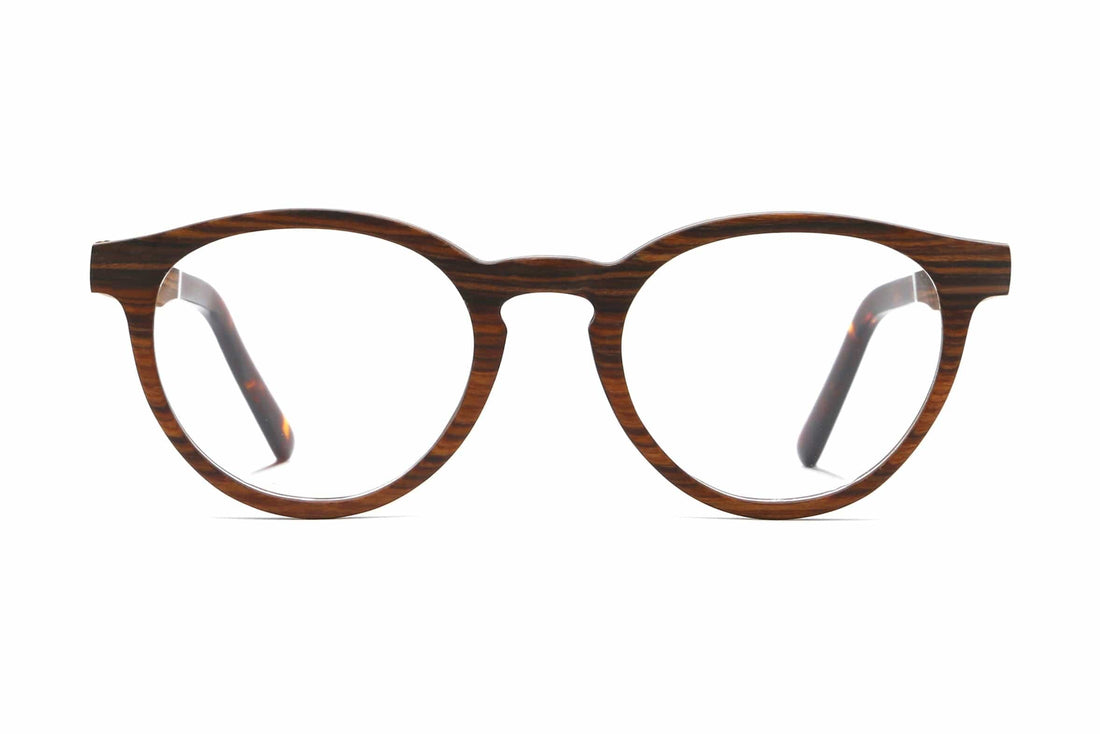
Wood is one of the most surprisingly lightweight materials in eyewear. Despite its substantial appearance, real wood has a low density — most well-crafted wooden frames land between 12 and 15 grams, meaningfully lighter than acetate equivalents and noticeably easier on the nose bridge by the end of a long day.
What sets wood apart for all-day comfort is how it sits against the skin. Where metal can feel cold and acetate can feel rigid, wood warms gently to body temperature, rests quietly against the temples, and doesn't create the pressure-point fatigue heavier frames cause. Wooden temples can also be milled into slim, well-balanced profiles that distribute weight evenly — the practical difference between glasses you wear and glasses you manage. For a lightweight wearer, wood is usually the first material worth trying.
Bio-Acetate Frames — Plant-Based Comfort
Bio-acetate is a plant-based alternative to traditional acetate that lands between 14 and 18 grams on most frames — light enough to disappear for everyday wear without losing the polish and color depth associated with classic acetate styles. For anyone who loves the look of acetate but finds standard frames too heavy by the afternoon, bio-acetate is often the cleanest upgrade.
The bigger comfort story is flexibility. Bio-acetate has a softer, slightly more forgiving feel than rigid petroleum-based acetate, which makes a real difference for sensitive skin, low nose bridges, and long days. It warms gently to body temperature and conforms to the contours of your face instead of pressing against them, so the frame stops registering after the first hour of wear.
That flexibility also makes bio-acetate especially comfortable for high-prescription wearers — when paired with high-index lenses, the total weight on your face stays manageable even on stronger scripts. And because the material is lighter than standard acetate, you can go a little bolder on the silhouette without paying for it in pressure marks by 5 p.m.
Style-wise, bio-acetate gives you the full spectrum of color and pattern without the bulk that often comes with classic acetate. Tortoise, crystal, deep matte tones, warm neutrals — all available in profiles that stay light enough for screen-time, travel, and back-to-back meetings. Explore some of our most popular bio-acetate styles below.
Metal Frames With Wooden Temples — The Best of Both Worlds
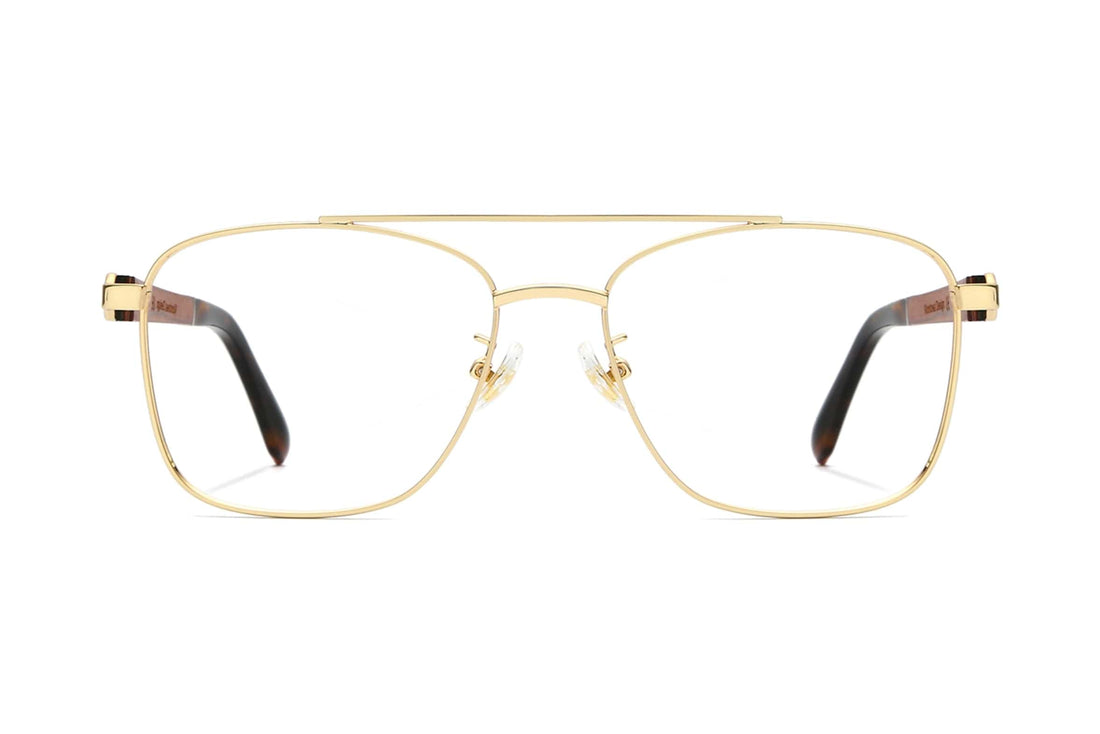
Metal frames with wooden temples are quietly one of the most comfortable lightweight builds in eyewear. By pairing a thin metal front (typically 6 to 8 grams) with natural wood temples, the construction stays well under 16 grams total — and crucially, the weight that does exist sits in the right places: structural load handled by the metal, contact points softened by the wood.
For all-day wearers, that distribution is the difference. A thin metal front means a slim, low-profile silhouette that doesn't press into the bridge of your nose. Adjustable nose pads let you dial in the fit precisely, so weight rests evenly across two contact points rather than pulling forward. And because the temples are wood instead of metal, there's no cold sensation against the sides of your head and no thin metal edge digging in after several hours of wear.
This hybrid construction is particularly well-suited to professionals who wear glasses through long workdays, minimalists who want a clean front profile, and anyone who finds all-metal frames a little cold or all-acetate frames a little heavy by the afternoon. It's also a strong fit for narrow bridges or asymmetrical faces — the metal front can be adjusted more precisely than an all-wood frame allows, and the wood temples flex gently with the material's natural give.
It's the kind of construction that's hard to appreciate until you've worn it for ten hours and forgotten the glasses were on. Explore our metal and wood eyeglasses collection to see the full range.
Acetate Frames — Classic, Slightly Heavier, but Comfortable
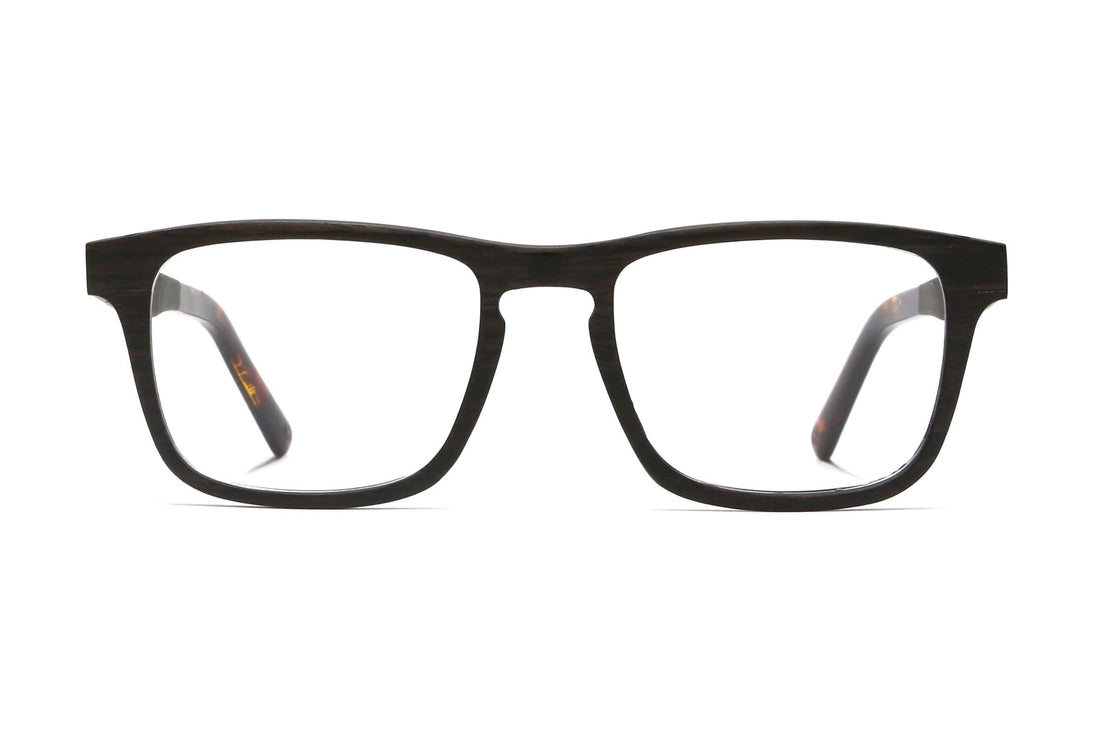
Standard acetate is the heaviest of the four materials here, typically landing between 25 and 35 grams. That doesn't make it uncomfortable — a well-designed acetate frame distributes weight evenly and remains wearable through a full day, especially in slimmer profiles with proper hinge and bridge engineering. Many wearers prefer the grounded, substantial feel acetate delivers. And many of our acetate frames pair the body with wooden temples — bringing the warmth and lightness of wood to the contact points where it matters most for comfort.
But it is noticeably more substantial on the face than wood, bio-acetate, or metal-with-wood hybrids. If you love the saturated color and depth that classic acetate is known for, browse our acetate glasses collection — that extra weight may be a fair trade-off. If you've been getting pressure marks, slipping frames, or end-of-day fatigue, though, switching out of standard acetate is usually the single biggest comfort upgrade available — and the easiest place to start is wood or bio-acetate.
A Note on Titanium and Rimless Frames
You'll often see titanium and rimless frames mentioned in lightweight eyewear conversations, and for good reason — both can produce extremely light glasses. They also come with trade-offs: titanium frames often feel cold against the skin and lack the warmth of natural materials, while rimless frames offer less structural protection for your lenses and limit styling options. At Kraywoods, we've chosen to focus on materials that deliver lightweight comfort with the natural feel, distinctive design, and eco-friendly sourcing that define our frames — which is why wood, bio-acetate, and metal-with-wood are at the heart of our collection.
Features That Make a Frame Feel Lighter (Beyond Material)
Material is only half the story. The right construction details can make a frame feel significantly lighter than its actual weight suggests.
Spring hinges are one of the most underrated comfort features. They allow the temples to flex outward gently, reducing pressure on the sides of your head and preventing that tight, pinched feeling. They also extend the lifespan of your frames. Small fit adjustments make a meaningful difference too — our guide on how to adjust glasses properly covers the basics.
Adjustable nose pads, common on metal-front frames, let you fine-tune the fit so weight rests evenly rather than pressing on one spot. This is especially important if you have a low nose bridge or asymmetrical features.
Balanced construction — meaning the frame's weight is evenly distributed between the bridge and temples — keeps glasses from sliding forward or tipping. A frame that's perfectly balanced will always feel lighter than one that's front-heavy, even if they weigh the same on a scale.
Thin temples reduce both visual and physical weight. Wood temples in particular can be milled into slim profiles that stay structurally sound while keeping pressure off the sides of your head.
Lens choice matters too. You can absolutely get blue light coatings, anti-reflective treatments, photochromic, or progressive lenses in lightweight frames — frame material doesn't limit your lens options. The right combination of light frame plus thinner lens technology is what delivers true all-day comfort.
Who Benefits Most From Ultra-Lightweight Glasses?
Lightweight frames are a smart choice for almost anyone, but a few groups feel the difference most:
-
Desk and screen workers who wear their glasses 8+ hours a day. Every gram counts when frames are on your face from morning meetings to evening emails.
-
People with sensitive noses or low nose bridges, who often struggle with frames sliding down or leaving pressure marks. A lighter frame with the right fit eliminates both problems.
-
High-prescription wearers, for whom lens weight already adds significant mass. Pairing a lightweight frame with high-index lenses keeps total weight manageable. See our guide to glasses for high prescriptions for more.
-
Progressive lens wearers, who carry slightly thicker lenses than single-vision wearers. A lightweight frame paired with high-index progressives is one of the most comfortable combinations available.
-
Anyone prone to glasses-related headaches, tension behind the ears, or red marks on the nose. Heavy frames are often the culprit, and switching materials can resolve discomfort almost immediately.
-
Active wearers and travelers who need frames that don't shift during movement and don't fatigue the face over long days.
How to Choose the Right Lightweight Glasses for You
Use this quick framework to narrow your options.
Start with material. Wood and bio-acetate are the lightest natural-feeling options and the most eco-conscious choices. Metal frames with wooden temples are ideal for a minimalist front with all-day comfort. Acetate is a fine choice if you prioritize style depth over absolute lightness. Here's how the four materials compare at a glance:
| Material | Typical weight | Comfort | Sustainability | Idéal pour |
| Bois | 12–15 g | Warm, natural, low pressure | Renewable, biodegradable | Everyday wear, design-conscious wearers |
| Bio-Acetate | 14–18 g | Flexible, skin-friendly | Plant-based, renewable | Sensitive skin, long days, color variety |
| Metal + Wood Temples | 12–16 g | Slim front, warm temples | Partially renewable | Minimalists, precise fit, professional wear |
| Traditional Acetate | 25–35 g | Comfortable but front-heavy | Petroleum-based | Color depth, classic style |
Check the hinge type. Spring hinges add comfort and longevity. If you wear your glasses all day, this small detail makes a meaningful difference.
Consider your prescription. If your prescription is +/-3.00 or stronger, ask about high-index lenses. They'll reduce lens weight noticeably and keep your frames feeling balanced — even with progressive or blue light coatings added.
Confirm the fit. Even the lightest frame will feel heavy if it doesn't fit properly. Pay attention to bridge width, temple length, and overall frame size relative to your face.
If you're not sure where to start, browse our complete range of lightweight wood styles below.
Principaux enseignements
-
The lightest, most comfortable glasses combine low-density materials with smart construction — frame material, hinge type, and lens thickness all influence how a pair feels by the end of the day.
-
Wood and bio-acetate are the two lightest natural-feeling materials in eyewear, typically falling between 12 and 18 grams, while traditional acetate frames often weigh nearly twice as much.
-
Metal frames with wooden temples are a hybrid worth considering for anyone who wants a minimalist front and warm, skin-friendly contact points — uniquely well-suited to long workdays.
-
Construction details like spring hinges, adjustable nose pads, and thin, balanced temples can make a frame feel lighter than its actual weight on a scale.
-
High-prescription wearers benefit most from pairing a lightweight frame with high-index lenses — total weight stays manageable even with progressive or blue light add-ons.
-
The right pair of lightweight glasses is one you forget you're wearing — that's the bar to aim for.
En résumé
The best lightweight glasses combine the right material, smart construction, and a fit that suits your face. Wood and bio-acetate top the list for natural-feeling, eco-conscious comfort, while metal frames with wooden temples deliver minimalist styling with warmth no all-metal frame can match. Beyond material, details like spring hinges, adjustable nose pads, and high-index lenses can completely transform how your glasses feel over a full day.
At Kraywoods, lightweight comfort is part of how we design every frame — from our signature wooden styles to our bio-acetate collection and our hybrid metal-with-wood designs, each pair is crafted to be worn all day and built to last.
FAQs
What are lightweight glasses?
Lightweight glasses are frames designed to weigh as little as possible while remaining durable and comfortable. They typically weigh between 8 and 20 grams and are made from low-density materials like wood, bio-acetate, or thin metal — often with thin temples and balanced construction that distribute weight evenly across your face.
How much do lightweight glasses weigh?
Lightweight glasses generally weigh between 8 and 20 grams, compared to traditional acetate frames that often weigh 25 to 35 grams. Wood, bio-acetate, and metal-with-wood hybrids consistently fall on the lighter end of that spectrum, with most modern designs landing around 12 to 18 grams.
Are wooden glasses really lightweight?
Yes. Despite their substantial appearance, real wood has a low density, so well-crafted wooden frames are often lighter than acetate equivalents. They also feel warm and natural on the skin, which adds to the sense of all-day comfort and reduces the pressure-point fatigue heavier frames can cause.
Is bio-acetate lighter than regular acetate?
Bio-acetate is generally lighter and more flexible than traditional petroleum-based acetate. It's made from renewable plant sources like cotton and wood pulp, giving it a softer feel while reducing environmental impact. The flexibility also helps it conform comfortably to your face over long stretches of wear.
What are the signs of a good pair of lightweight glasses?
A quality lightweight pair will feel balanced rather than front-heavy, leave no pressure marks after hours of wear, and stay in place without slipping. According to The Vision Council, frame fit is a key step in getting glasses right — proper fitting ensures balance and comfort across long days. Look for premium materials, spring hinges, and thin, well-finished temples.
Can I get blue light or progressive lenses in lightweight glasses?
Absolutely. Frame weight and lens options are independent. You can add blue light filtering, anti-reflective coatings, photochromic treatments, or progressive lenses to virtually any lightweight frame without significantly affecting how it feels. Lens choice influences weight far more than coatings or filters do.
Do lightweight glasses break more easily?
Not necessarily. Modern lightweight frames — especially bio-acetate, well-finished wood, and thin metal — are designed for durability. Quality construction matters more than weight when it comes to longevity, and spring hinges in particular extend the lifespan of any lightweight frame.
 Rachad Kabbara
Lunettes légères : des montures ultra-confortables conçues pour être portées toute la journée
Faire ses achats par catégorie